
Winter Corn

I started this Substack just shy of two years ago. In the first few essays, I introduced how I had gotten to know and use some of the organic farmer “Thor”’s land to grow garden produce and later some specialized maize (corn). That introduction to Thor’s farm can be found here: https://sodakfred.substack.com/p/thors-farm . In the essay after that one I talked about harvesting “squirrel” corn during the winter and doing direct sales to people of this product: https://sodakfred.substack.com/p/squirrel-corn . The difference this winter versus those recent ones is that I’m picking two different corn stands; one that is the typical (but a larger area this year) yellow field corn of Thor’s to sell as “squirrel” corn but also a stand of “Bloody Butcher”, a red heirloom variety that I have also written about but not from Thor’s farm: https://sodakfred.substack.com/p/bloody-butcher-the-magnificent-heirloom . I’ve only hand-picked two different corn stands during the winter before, and in that season (2023/24) I was done by mid-January ( https://sodakfred.substack.com/p/growing-triple-m-corn-in-south-dakota ). My winter corn picking start this season didn’t happen until almost mid-December because I was helping my solider son move back from Alaska in early December as he finished up his second tour of duty. Thus, I had a larger than normal patch of Thor’s yellow field corn to pick for “squirrels” as well as almost the entire 1+ acres (0.4+ hectares) of Bloody Butcher. I had completed the harvest (one wasn’t much of a harvest) of two other colored corn patches last fall (https://sodakfred.substack.com/p/fall-colored-corn-harvest-2025 ).
My plan was to ping-pong back and forth between the yellow ear corn and the Bloody Butcher and adjust as conditions occurred. The yellow “squirrel corn” could provide fairly quick cash flow as I completed “banana” and other boxes to sell but it was more remote from easy driving for me as the patch was in a crop field about 250 yards (229 meters) from the nearest maintained township gravel road. The Bloody Butcher patch was accessible by my vehicle if there was no noticeable amount of snow on the dirt trail of the larger field of which the BB planted “triangle” was a part and if the ground was either frozen or dried out enough so no real major mud was encountered. If there was a good amount of snow or the dirt trail was too muddy, then the Bloody Butcher ears would have to be sledded out about 500 yards (457 m) to another gravel township road. And, of course, there was the actual work of moving through sometimes heavily weeded rows picking ears from standing (or fallen down) corn stalks. I knew all of this going into the winter, and perhaps the “adventure” of it all was part of the accomplishment appeal 😉.
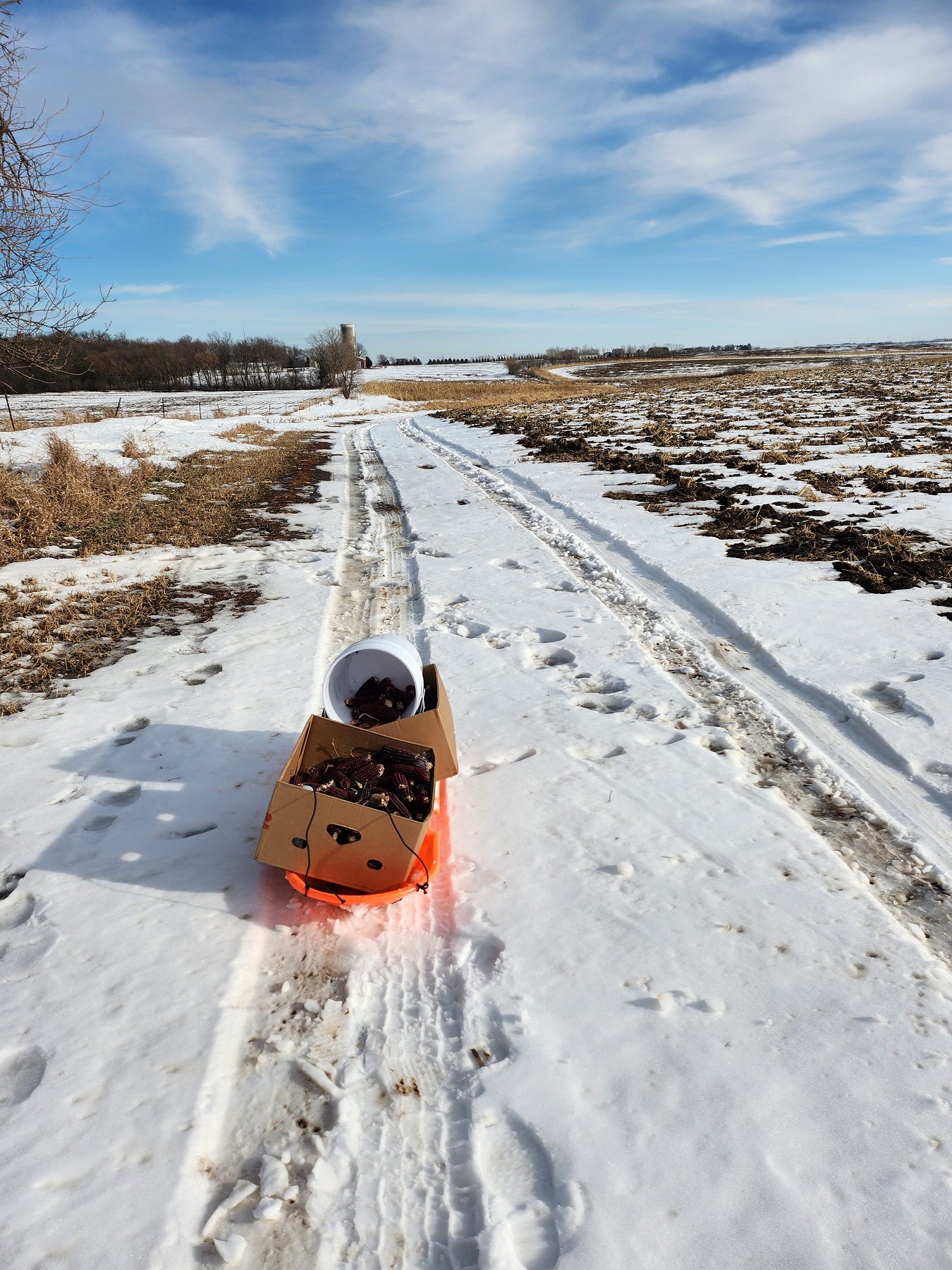
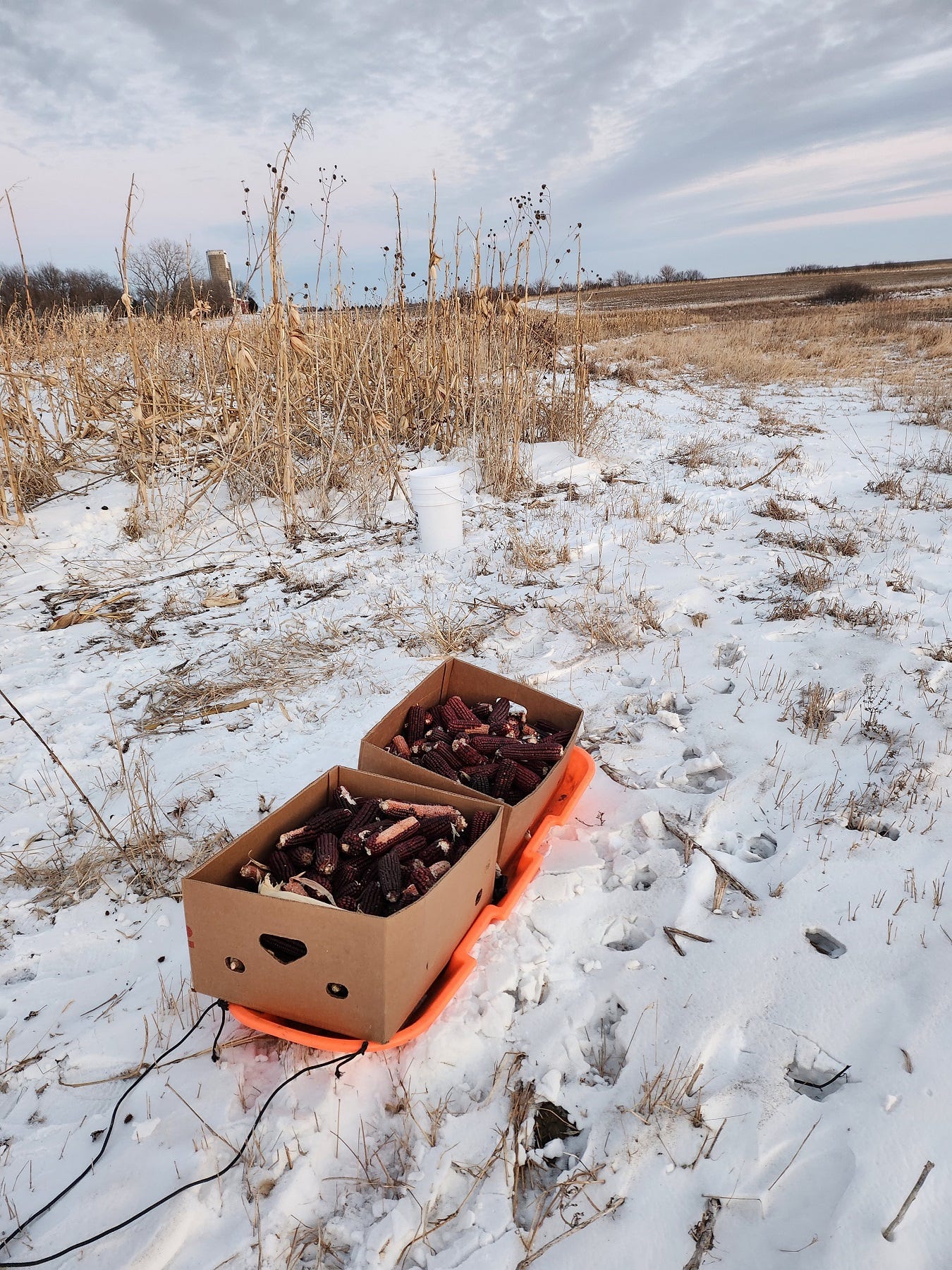
The most snow that my local area has gotten this winter was when I was up in Alaska and on the way back so the first trips to both outstanding corn patches were with the kiddie sled. Two banana boxes will ride ok on the sled and I placed my two 5-gallon (18.9 liters) pick buckets in the boxes on the way in and they ride on the corn ears on the way out. I had harvested the first two long rows of the Bloody Butcher along the property fence line right before Thanksgiving, knowing that area would typically drift the deepest for snow because there was nothing between it and a strong northwest wind. And this was a fact when I did the first winter Bloody Butcher pick, having to move down some rows so I wouldn’t be knee deep in snow. I marked and picked two rows on that visit; four buckets worth because the BB ears tended to be small in size because of growing conditions during the previous summer. The pull-back from this patch was mostly uphill but the 60+ pounds (27+ kilograms) of red ears, boxes, and buckets went well. The older little orange sled had lost its thicker nylon pull rope that I had on it but I found some parachute cord (I wonder where that came from 😊) and it worked getting back to the car.
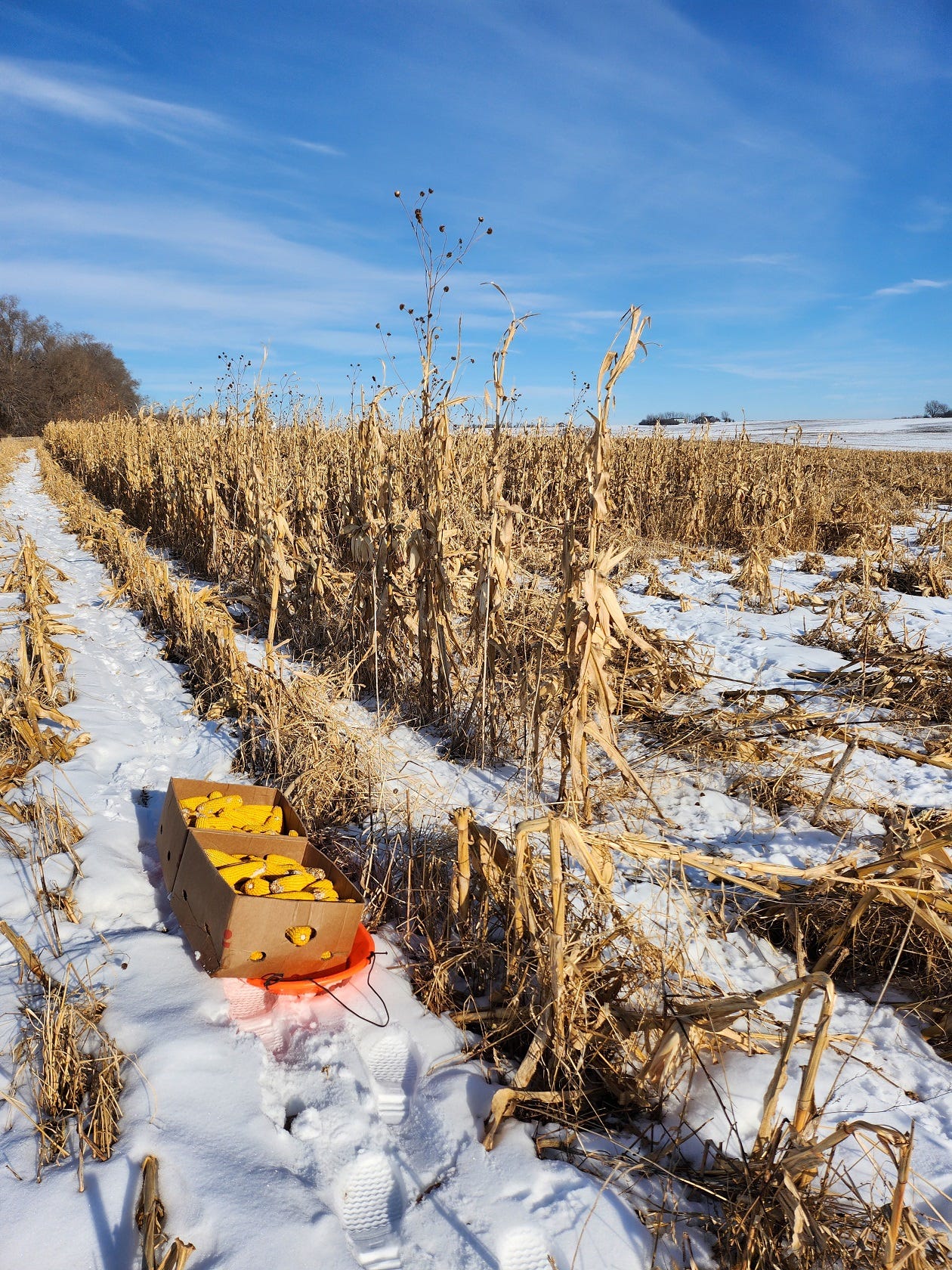
The day before, I had walked out to the organic yellow field corn patch that has 16 rows that are each about 100 meters long and picked two banana boxes of these mostly larger ears and only managed to harvest one row. I had to do some cross row cutting of corn stubble to get back to the car on the gravel road but the pull out on the sled worked well in this location, that is sort of on the opposite side of the farm. I got at least one more Bloody Butcher pick in before Christmas and New Years time occurred with the family.
The kiddie sled pull out with some Bloody Butcher about half way back to the car, the corn patch is in the background; The sled load with yellow squirrel corn that is ready to depart that field the same week.
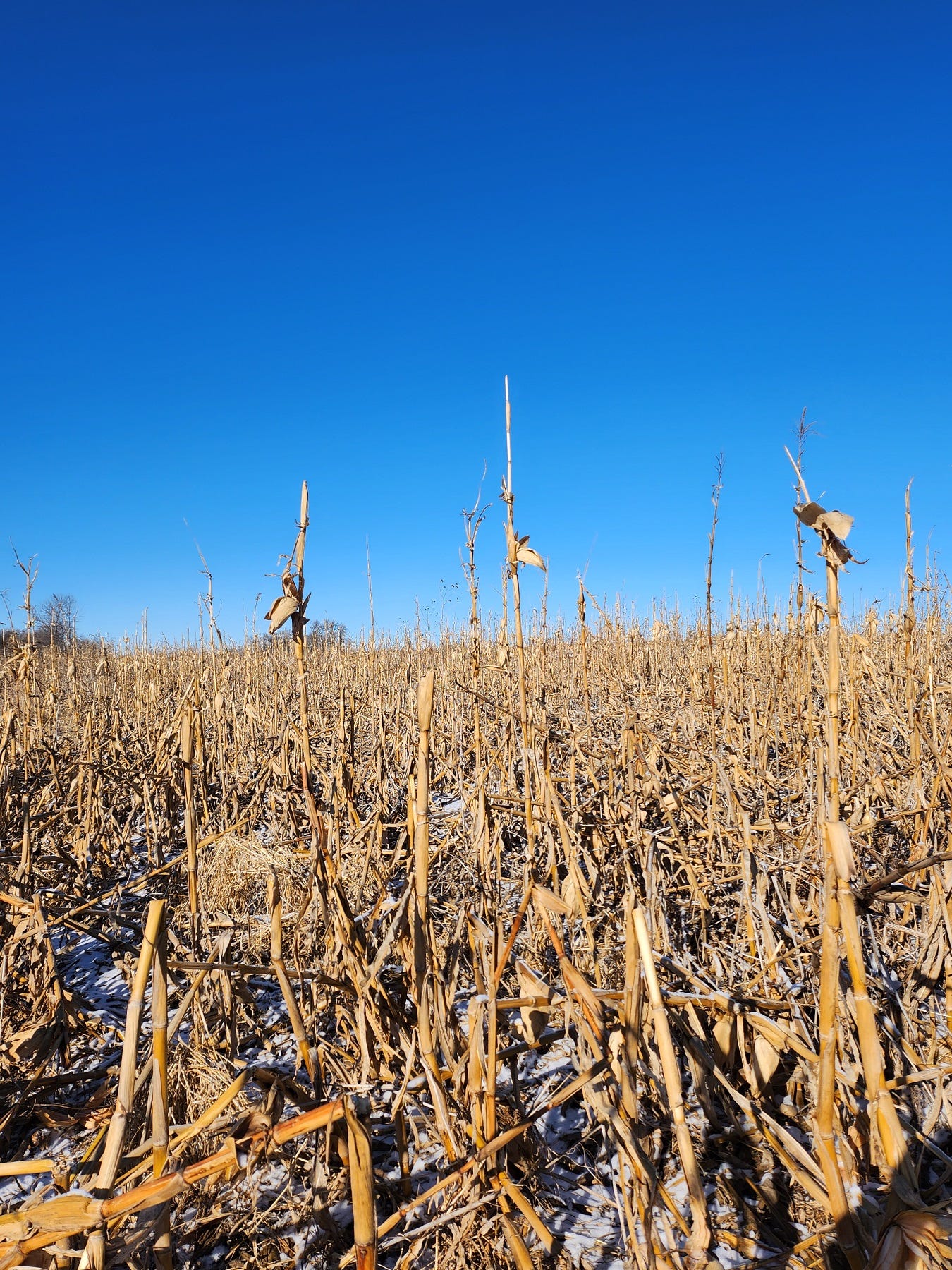
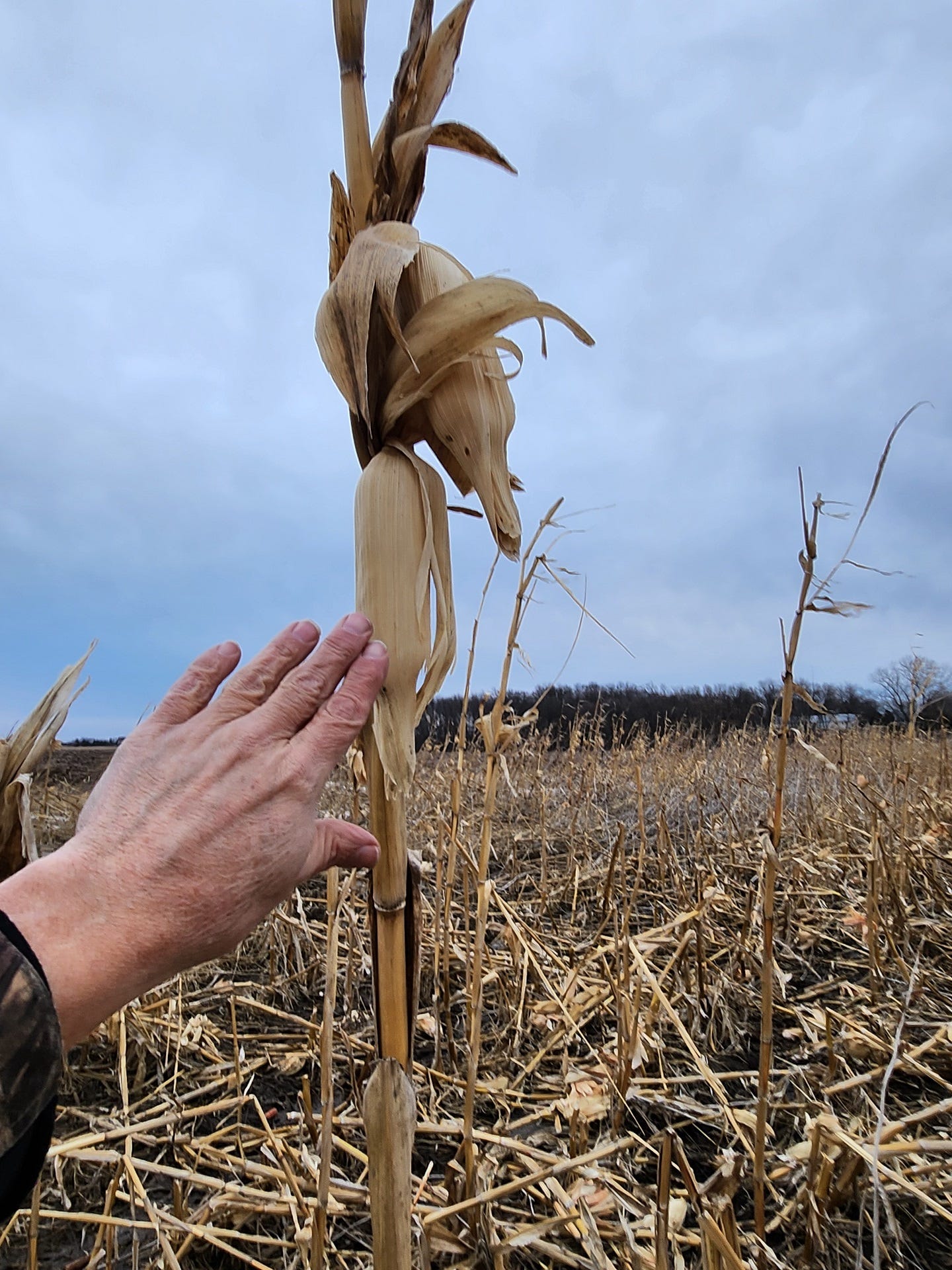
Late December and January had a seesaw pattern for temperatures and frozen precipitation. I went to the Bloody Butcher patch in early January and was able to drive down the field trail because the snow had melted away but then the mud refroze. Much of the red corn stand had stalks lodged by this time, probably the result of both some strong winter wind events as well as being planted too close together the previous June. The tangled mess required both looking for ears still upright to those on bent over stalks to even ones laying on the ground. I made slow but steady progress working the rows. By the end of January, a bit more snow had fallen and the last Bloody Butcher pick of the month was back to the orange plastic sled.
Red corn in buckets on a mostly snow free January 2, 2006; A typical look of the tangled Bloody Butcher rows; Sledding out red corn in late January.
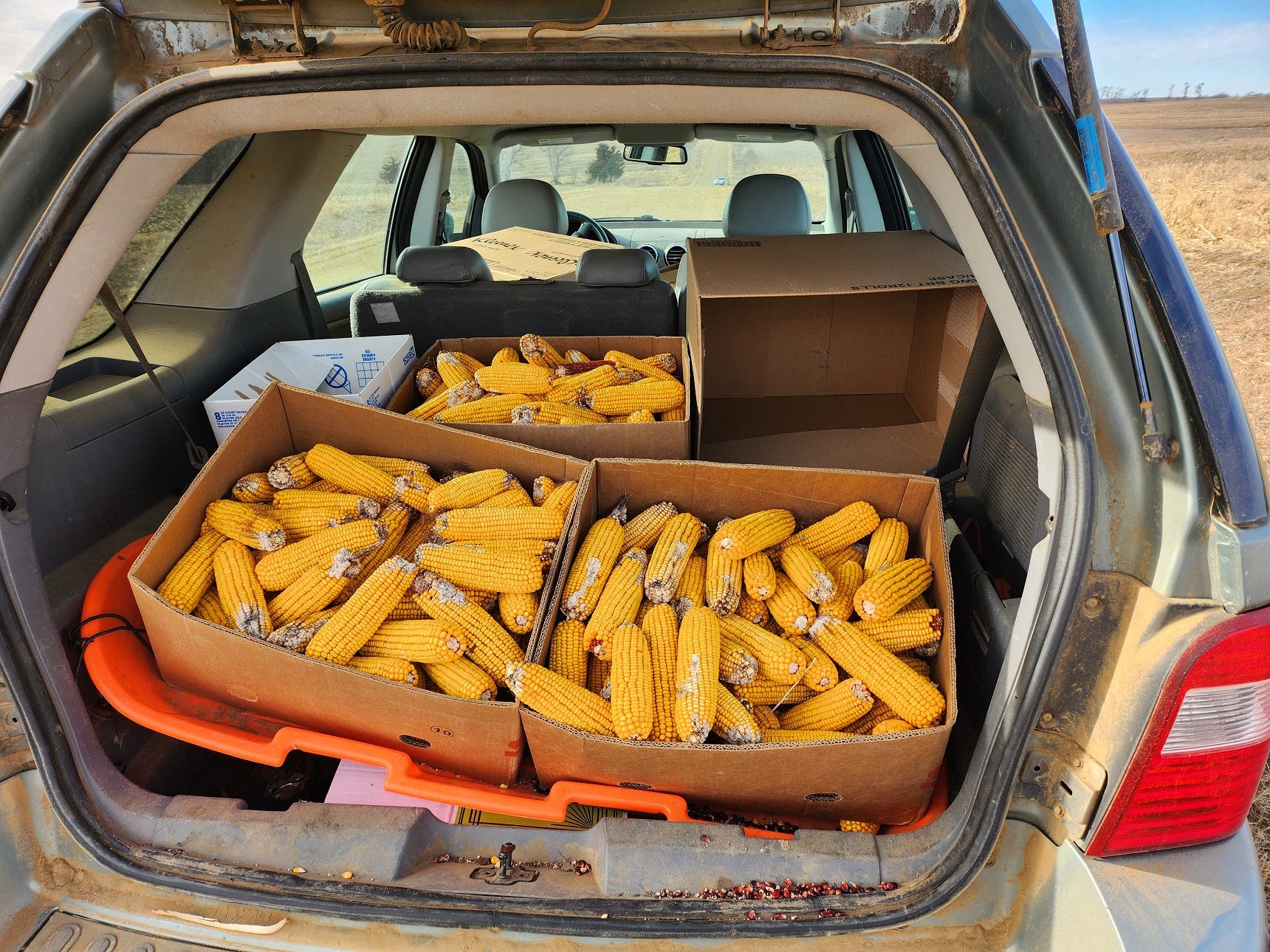
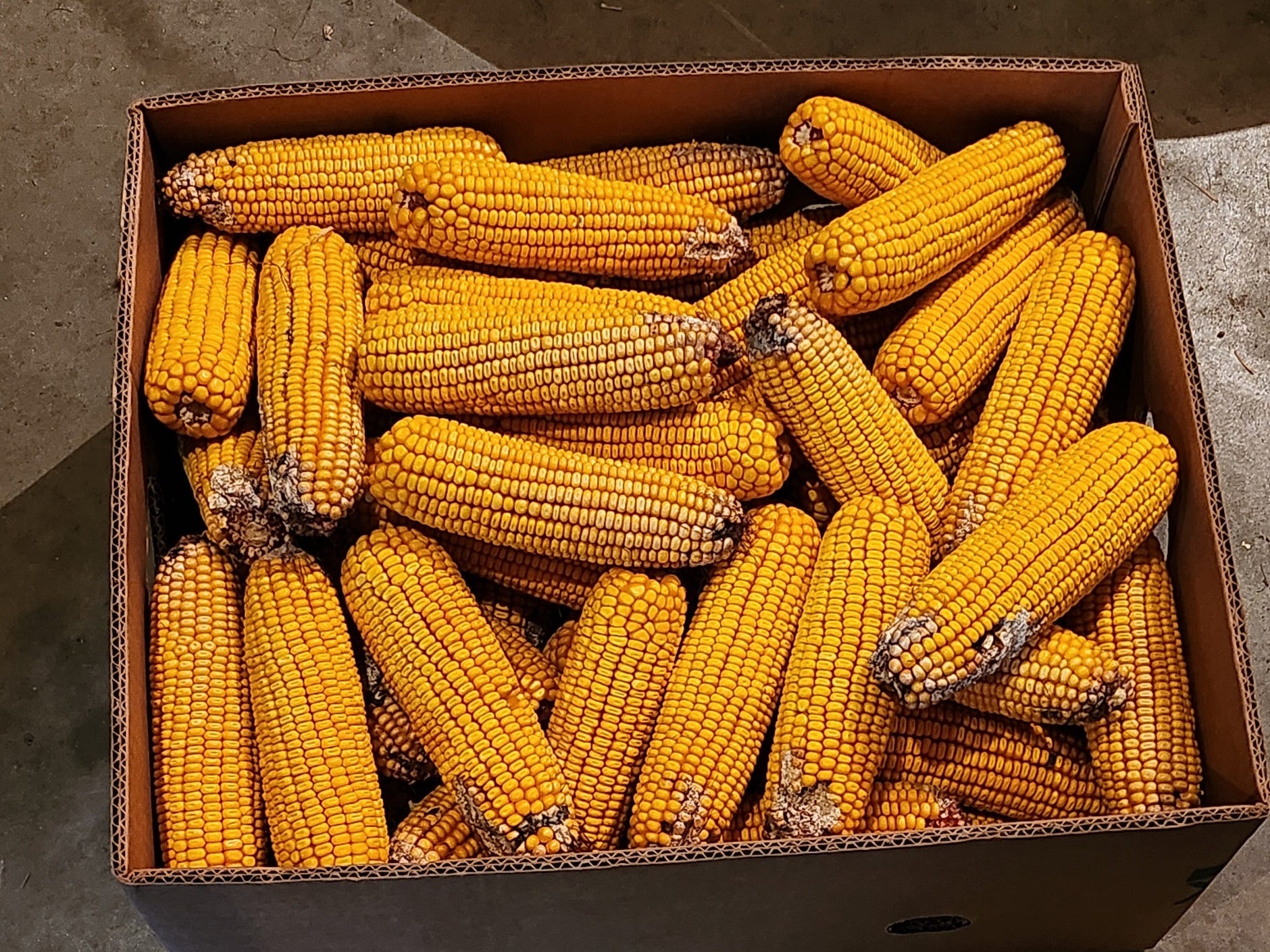
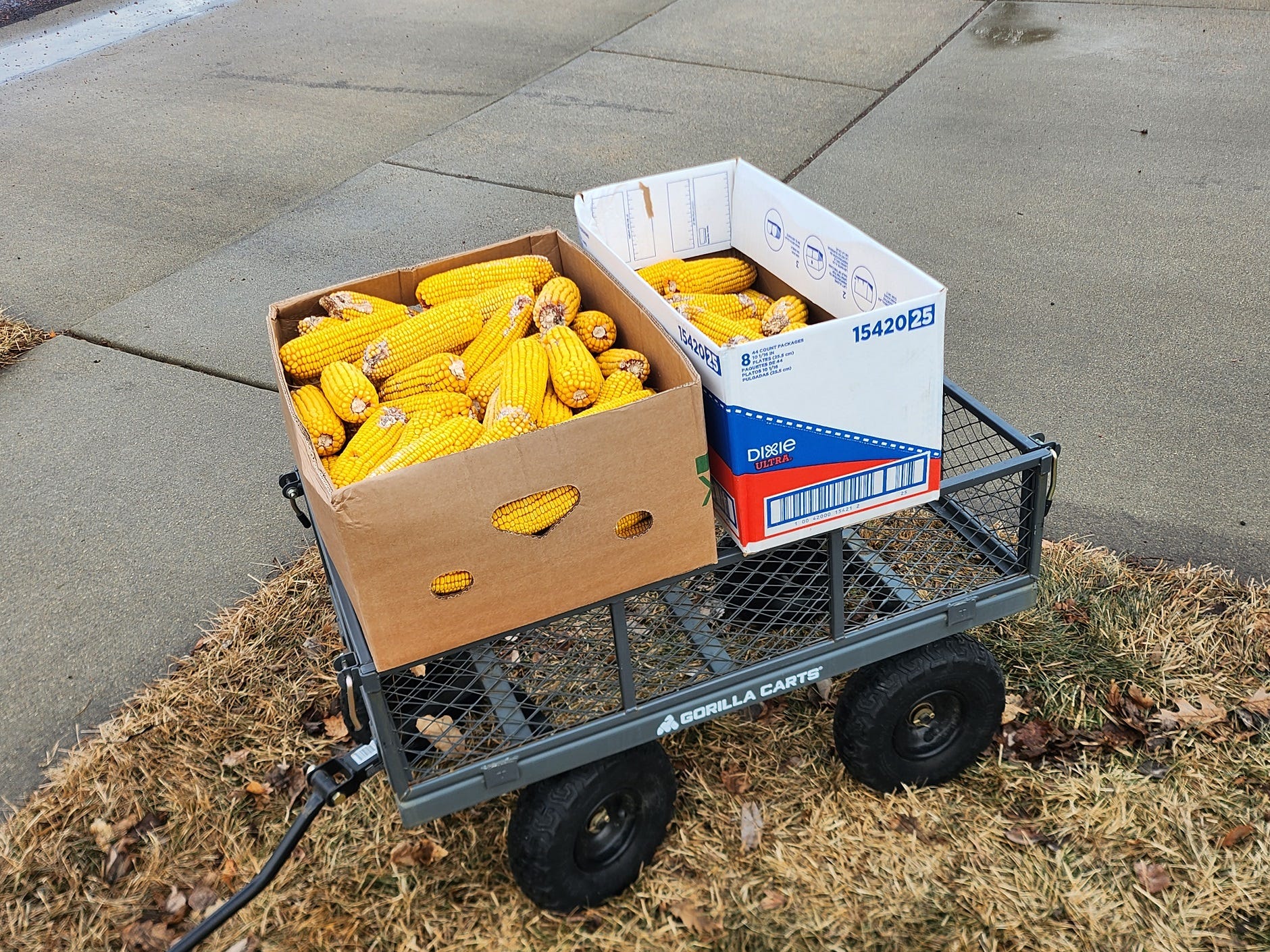
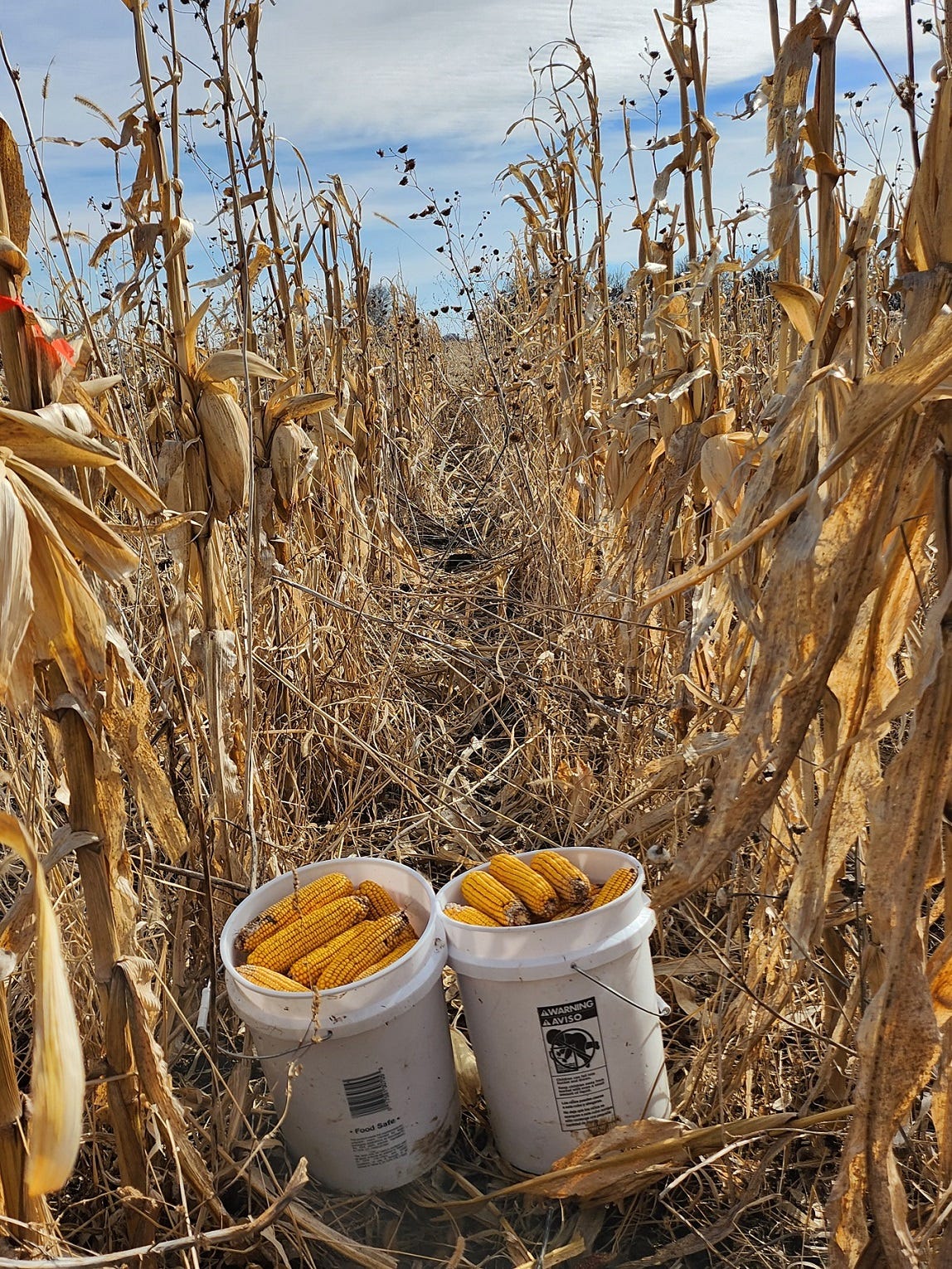
The yellow squirrel corn pick got into a rhythm of hauling out six buckets per visit (two at a time x three walk out and backs to the car on the road). I would then sort the “raw” boxes into a banana box of the largest and least affected by corn borer damage (yes, 2025 was a great year for that invasive European insect pest against non-GMO modified maize), followed by a box of medium-sized and/or more corn borer damaged ears to sell at a reduced price per pound, and lastly very small or partially deer eaten ears that I would shell the very best or interior kernels for human or chicken use. My price per box came down from where I had started, primarily because of the corn borer issue and because I had a good amount of squirrel corn to move. The current happy price appears to be about $20 for a 30 or so pound (13.6 kg) box of the larger and better ears. My offerings usually last less than two days on Facebook, mostly noticed by people using Marketplace. A single listing often leads to multiple buyers as I can archive the “chats” when updating the current box as sold but then reactivate specific chats to tell potential buyers that I have a various type of box for them. So far, I’ve only been truly stood up (drove into “big city” to meet someone) once this season.
Ready to depart from my gravel road parking location with three “raw” boxes of potential squirrel corn; A finished single “prime” box; A double special of a prime box along with a “seconds” box picked up in my driveway.
The Bloody Butcher harvesting also got into a steady state of taking out rows but its final disposition is less clear and remains secondary in getting it all out and tertiary in getting it shelled because I’m still processing some heirloom Ohio Blue Clarage and have a bin of that to finish. I’ve made two decent sized sales of the OBC corn to a local restaurant and probably have another partial of that poundage left to sell to them. That will free up the last larger bin I have before using 5-gallon buckets to house BB corn still on the ear.
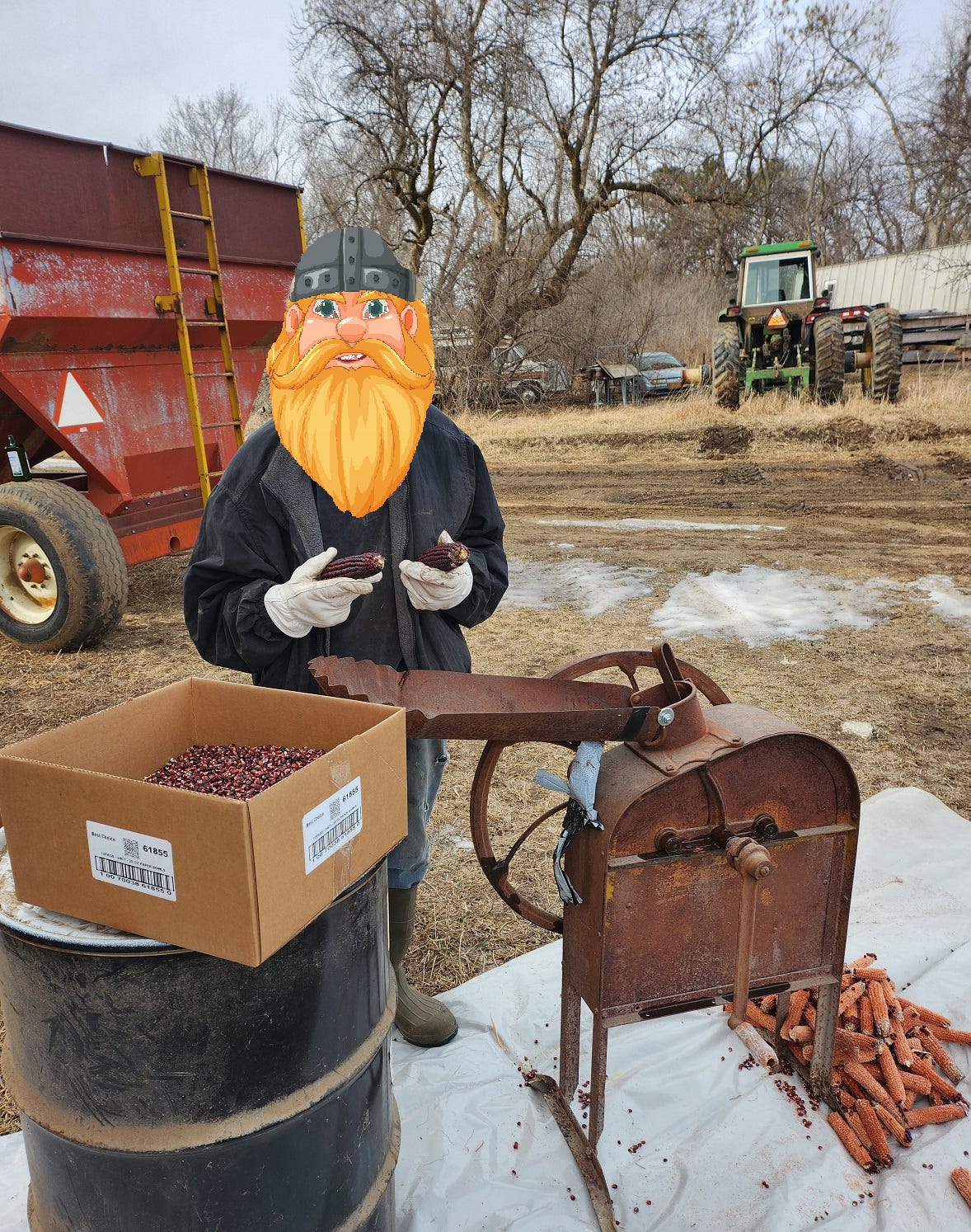
The other different twist in the wind regarding the Bloody Butcher is that Thor went through the effort in getting it certified organic, except the first 30 feet (9.1 m) next to the fence line that can’t qualify, so I had hoped to give him about 35-40% of it so he could sell some bulk as seed because he’s the only one that can sell it as actually “organic” (see the essay about this situation: https://sodakfred.substack.com/p/usda-certified-organic-another-way ). And Thor had went out of his way to buy back a larger antique hand cranked corn sheller his farm that once had, although I never asked him to do so in this regard. His typical winter pattern in the past was to attend a number of organic “conventions” and meetings in the region and I thought this might be a way for him to sell some of the Bloody Butcher for himself by taking buckets of shelled out seed along with him on these travels.
Alas, this hasn’t happened as I hoped, either in getting a lot of shelled at his place with the large old crank unit or him selling any shelled-out BB on his own. He and I did get a couple of banana boxes of Bloody Butcher from “his” side of the patch shelled on a nice winter day, with me doing most of the cranking and him feeding the ears, although in theory the old machine should be able of self-feeding. The good news was that the old metal beast could handle the different sized ears without needing adjusting between them and we were getting an ear shelled with about three turns of the crank. However, the corn borer damage on most of the ear ends (as I said, 2025 was a good year for that insect pest on his farm for non-GMO corn) started to bug him and he would “pencil sharpen” the ears on the opposite side of the machine against the turning crank shaft and thus it was taking about eight or more of my cranks for him to drop in the next ear. It ended up being fairly tiring for me, so I vowed to pre-“pencil sharpen” the next batch of ears before I showed up on the farm. That I did, but because of a combination of reasons we haven’t gotten the next two boxes done. This first week of March is supposed to be nice and maybe we’ll get at least the two banana boxes of my “sharpened” BB ears done and maybe even another one by next Sunday. However, I won’t hold my breath on that predication.
“Thor” and the old hand cranked corn sheller on the day we connected 😊.
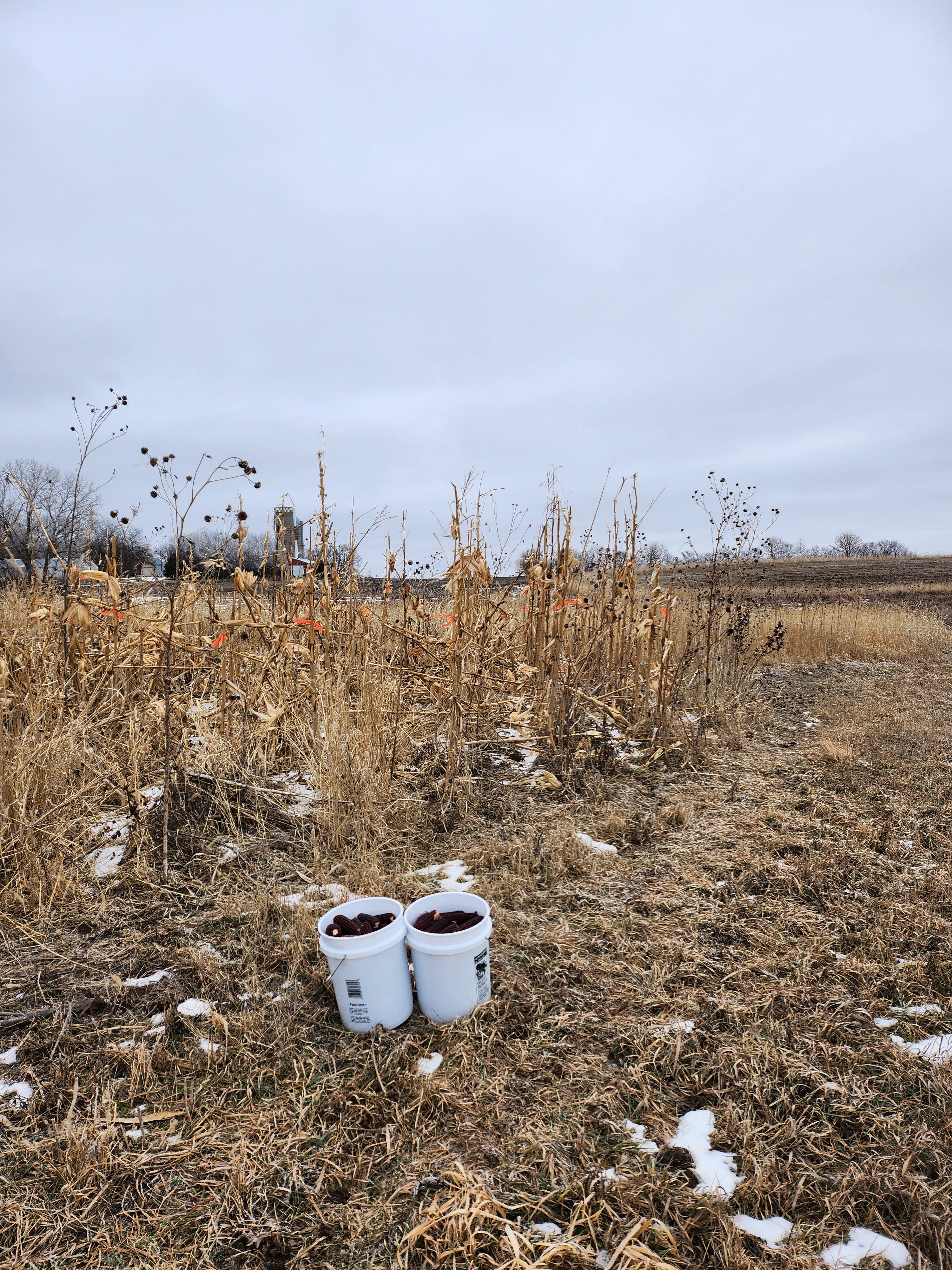
February was another steady work through month, with rows from both the yellow squirrel corn and the Bloody Butcher getting cleared. It was generally snow free, although the last red corn pick involved some active snowing and the old car got out on the dirt trail just fine. I continue to sell every box of squirrel corn I put together, mostly within a few days so both Thor and myself are getting a bit of green (although I take South Dakota and “bedroom town” sales tax out of my share) on a regular occasion. Even with his minority cut, Thor is still making about 3x on each load (if it was converted to a “bushel” of shelled) we sell compared to his above conventional GMO price that he gets (if he can get it trucked out) of his organic but still common commodity yellow corn. I’ve crossed over 50% of that corn patch being harvested and more will come off of it this week. The Bloody Butcher is coming out as well but it might be pushing April before that is all done. We’ll see.
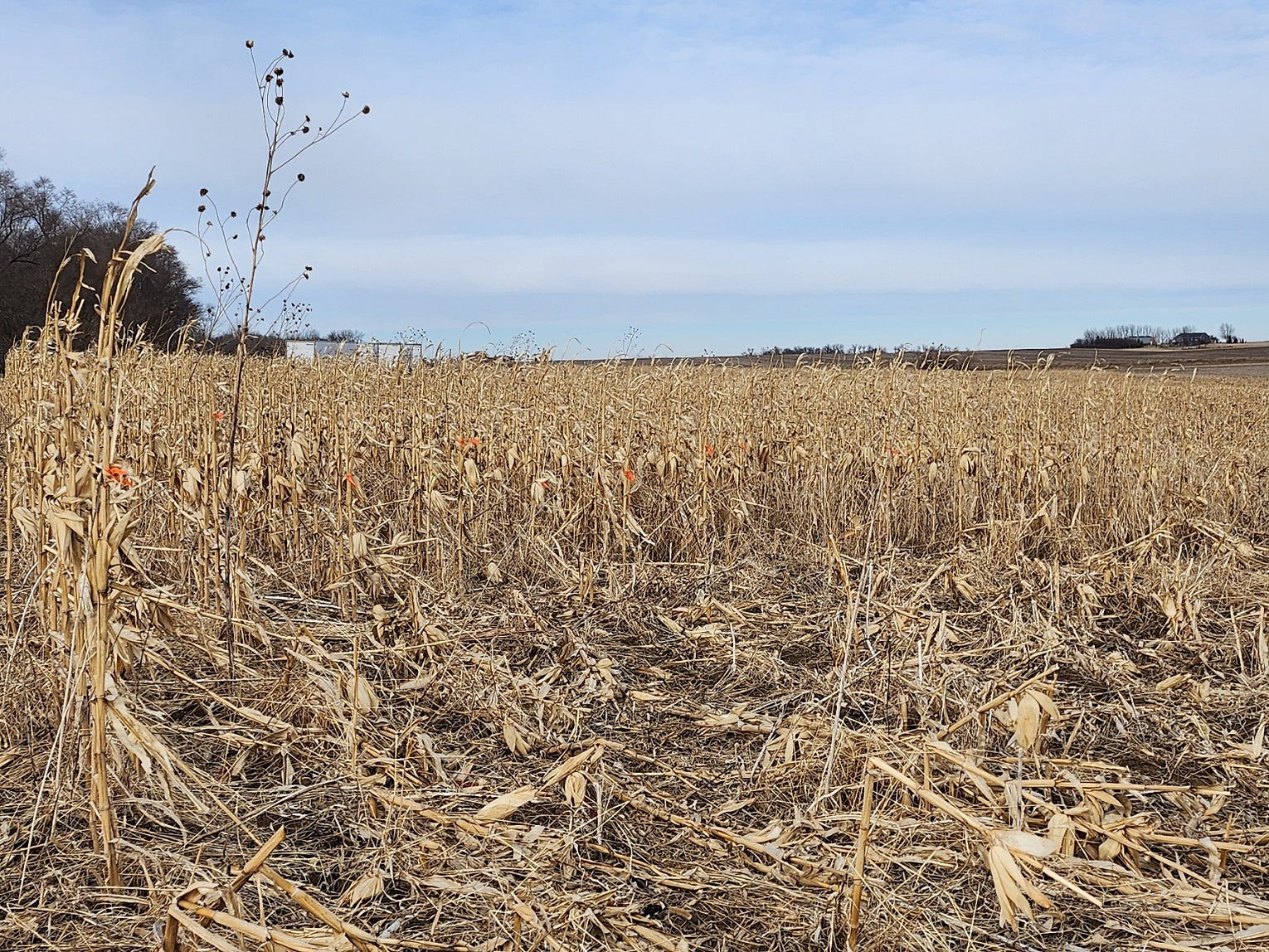
Buckets of squirrel corn await me carrying them out of the patch to the car; The orange marked completed rows compared to the those remaining, February 24; There are still some taller hanging Bloody Butcher ears out there as I worked rows last month; Picking red corn in a snow/sleet event on February 26.
If you like this series of essays on Substack, please spread the word. It’s always fun to get new subscribers.
The on-line vegetable seed and corn for home grinding store is open and a Google Ads campaign is running 😊.
https://dakprstreamseed.us/
Next time: Be Able to Walk Away…